The Wendy's Company: Duality Online
When I read this weeks prompt, my mind immediately flashed towards the food chain Wendy's. And no, it's not because I love their frosty, but because my mind travels back to 2017 when their account was trending on Twitter. If you don't remember, here's the rundown. Sometime in 2017, the Wendy's Twitter account went viral for posting replies "roasting" people who didn't like their food. It evolved over some time and ultimately ended with a series of responses to people asking to get roasted and even other food chain getting involved. Whether it was incidental or not, it created a lot of exposure for the company, and led to a lot of business from people who wanted to be involved in their online frenzy. This obviously contributes to their online personality, as it is still remembered by people to this day. However, when you view the way they are presented at a corporate level, they seem like an entirely different company.
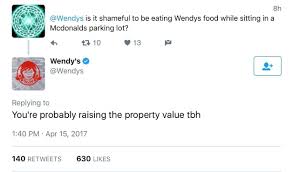
When looking at the way Wendy's presents themselves from a more professional level, their online personality varies from the one they reveal on their social media. Their website is more designed to show off their values and traditions. Both their social media and website do a good job communicating, but I think the audiences they are communicating to are different. Their twitter does a good job of advertising to teens and young adults, the primary users of social media and the demographic which would find their seemingly improper tweets funny. Their website is definitely more geared to an older demographic who are interested in reading about the history and background about the food they are eating. However, both their social media and website have one thing in common- they promote their fresh and nonfrozen beef, which is a huge factor of their appeal.
On the
company website, their organization is very strategic. At the very top is an icon to order and deliver food. It is easy to see and it makes it very accessible to the customer. The top also includes tabs to view different parts of the website like what they value, who they are as a company, and a way to find jobs. Putting these at the top promotes the most positive things about the company first. The middle includes company offers or events that they are promoting. The bottom of the page includes customer service and other franchising tabs. The way they have their page organized is very effective to me. The needs of a typical customer (one looking to order, find a job, learn more) met at the very top of the page. Further information for a customer wanting to learn more is found shortly below, while links to their customer service is found at the bottom. That way someone has to scroll through all of the company's resources and answers before addressing a problem or concern.
I think the business presents a conflicted online identity. Their website presents a very people oriented, quality focused business. Meanwhile their social media almost acts as a an alter ego. One which makes fun and comes after people. As funny as it can be, it creates two different personalities for their company. Before I researches Wendy's, I just thought of it as the fast food chain who roasted people. I never realized it was a company who valued minimizing their environmental footprint, support social justice groups, and donated to those in need. I think that is a problem that they could fix. As both forms of the way they communicate online is beneficial to their advertisement and public outreach, it wouldn't hurt for them to embrace the identities of their other online half. By combining what makes their customers laugh with what makes their customers care, I believe their online personality would be close to perfect.


Comments
Post a Comment